September 30, 2026. A captain is struck from behind inside the cockpit. His vision blurs. His jet begins to fall. More than 170 lives depend on one thing. He must reach a door just feet away. He can barely stand.
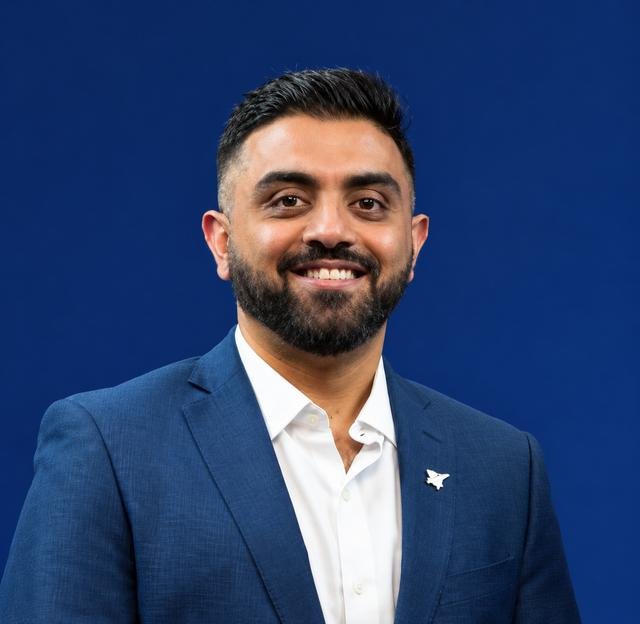
Captain Smit Machchhar is 38 years old. He learned to fly half a world away from home, at a flight school in Dunedin, New Zealand.
He flies for India’s SpiceJet for 11 years and rises to senior commander. In 2022, he joins flydubai and settles in Dubai with his wife, Sonal, and their two children.
By 2026, he has 17 years in aviation. Eleven of them are spent in the captain’s seat.
September 30, 2026. Dubai.
Flight FZ1073 is a routine run. A Boeing 737 MAX 8 bound for Tel Aviv, with more than 170 passengers and crew on board.
Machchhar is the pilot flying. Beside him sits his 29-year-old first officer.
Nothing seems wrong. Machchhar later says that if anything had hinted at danger on the ground, he would have acted.
Then a heavy blow strikes the back of his head.
His first thought is a pilot’s thought. Something in the aircraft has failed. A piece of the structure has broken loose and fallen on him.
Then a second blow lands. Then another.
It is not the aircraft. It is the man in the seat beside him.
According to UAE prosecutors, the co-pilot is attacking him with the cockpit’s emergency crash axe, a tool meant to help people escape after a crash. Investigators say he is trying to take control of the plane.
Machchhar raises his arms to block the blows. His arm is hurt. His vision narrows until the cockpit is a blur.
And the jet begins to fall.
Less than two minutes.
Passengers and Israeli authorities later say the aircraft drops about 17,000 feet in under two minutes. Machchhar collapses face down on the cockpit floor.
He can barely see. He can barely move. But 17 years of flying tell him exactly what his body is feeling. The plane is plunging.
Here’s what makes it worse: he has already reached for the door once. He believes the attacker shut it again.
Cockpit doors were reinforced after 2001 to keep attackers out. Now that same door is sealing him in.
He can hear people screaming outside. He recites a devotional prayer for strength.
Lying on the floor, still being struck, he talks to himself.
“This is the last push, Smit, do it, the door is right there.”
One last push.
He lunges. His hand finds the handle. He turns it.
The door opens, and he screams for help.
In the cabin, a reserve flydubai pilot travelling as a passenger has already sensed something is wrong. Investigators say he uses the access code to enter and finds the captain under attack.
Ordinary travellers rush forward behind him. Together they overpower the co-pilot and drag him out of the cockpit.
Two pilots who were meant to fly the return trip take the controls. They steady the jet. Two emergency signals go out, and the flight turns toward Tabuk, in northwestern Saudi Arabia.
Later that day. Tabuk.
Flight FZ1073 touches down safely. Every passenger and crew member on board survives.
Machchhar is treated at a hospital in Tabuk, then flown back to the UAE to recover in Abu Dhabi.
October 2, 2026.
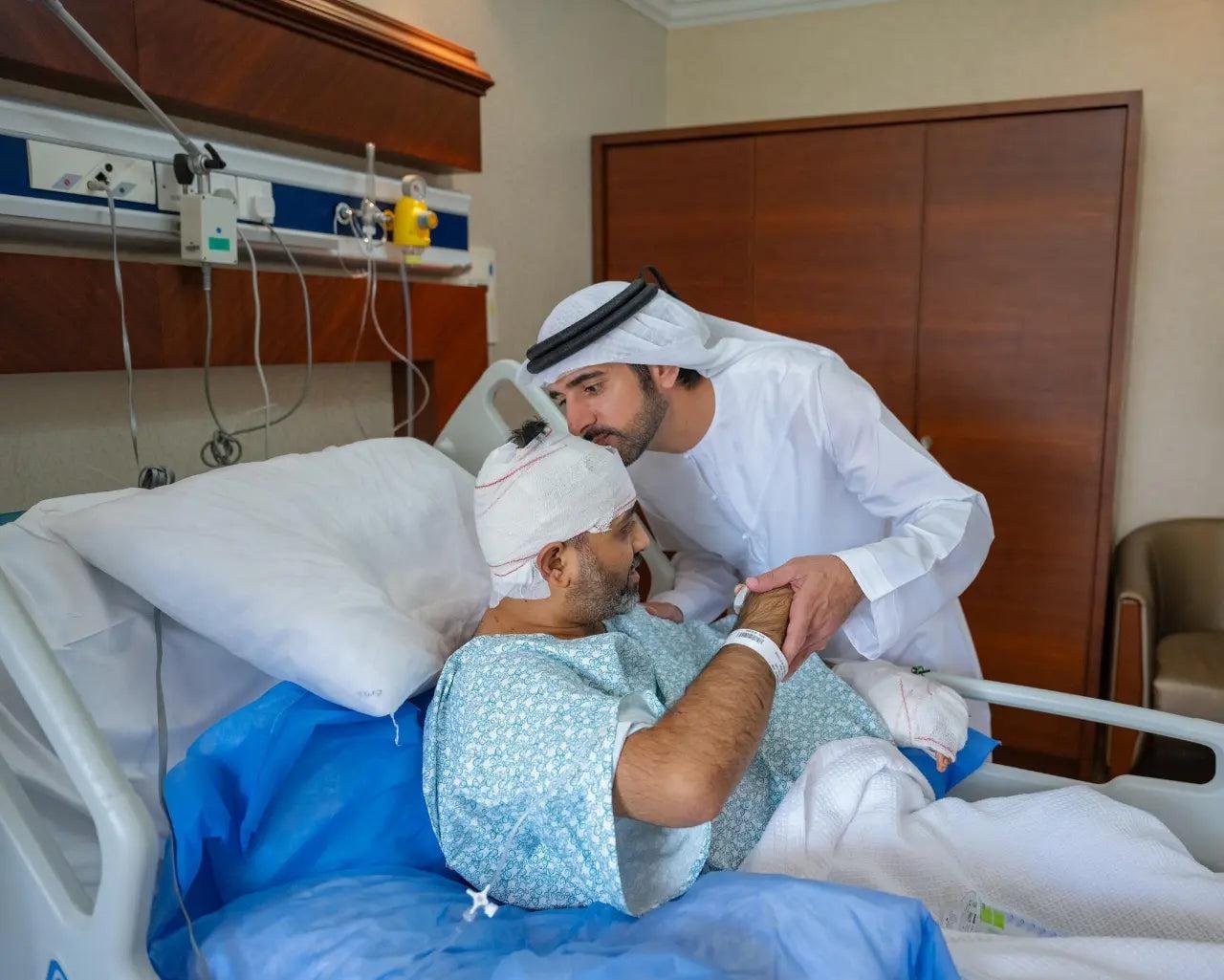
From his hospital bed, his head bandaged, he describes the attack in a video call that runs nearly 10 minutes.
He breaks down as he remembers. He apologizes for crying.
He does not call himself a hero. He says he fought to save his own life, but he also knew he could not let everyone else die.
And he insists the others on board played an equal role.
His wife, Sonal, says the family deliberately avoids asking him about that day. They do not want to trigger flashbacks.
October 3.
Dubai’s Crown Prince, Sheikh Hamdan, visits his bedside, embraces him, and praises his courage and his care for human life.
October 8. Jerusalem.
Six passengers who helped stop the attack receive Israel’s highest civilian award for bravery. The same honour is promised to Machchhar once he regains his strength.
October 27, 2026.
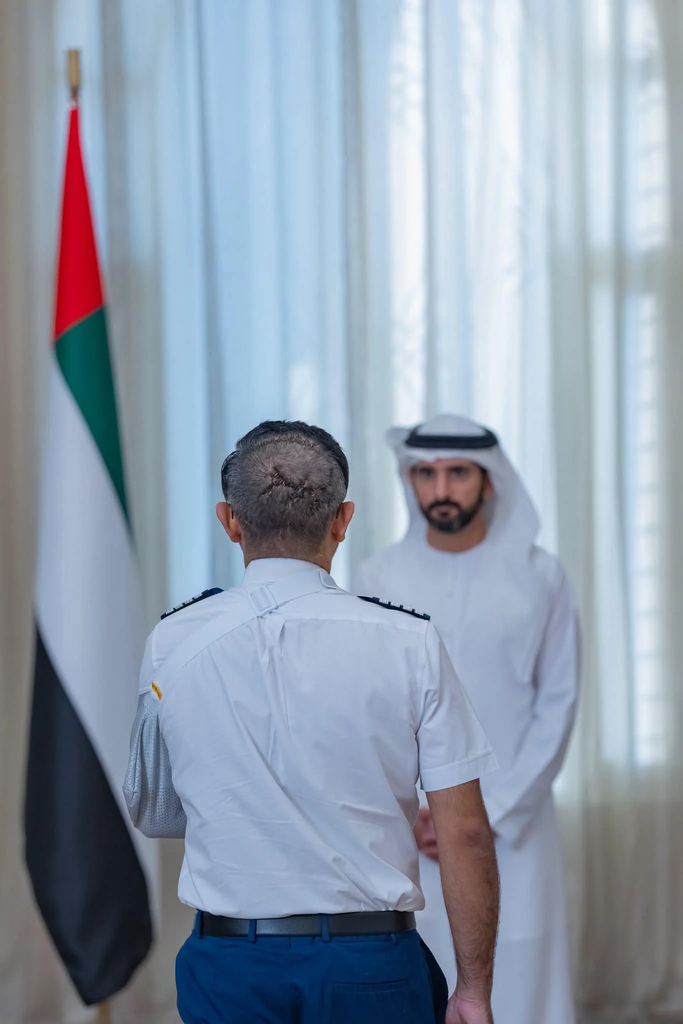
The UAE confers the First-Class Order of Zayed II on Machchhar and his fellow crew members, one of the country’s top civilian honours. He steps forward in uniform, the marks of his injuries still visible on his head.
The investigation is still ongoing, and the allegations against the co-pilot remain subject to the legal process.
But one thing is already clear. A man who could barely see found the strength to reach a handle a few feet away. One turn of his wrist let everyone else in to help.
He calls himself an ordinary person. And he says he will fly again, hopefully very soon.
Courage is rarely the absence of fear. Sometimes it is one more push when your body says you have nothing left. And sometimes the bravest thing you can do is open the door and let others help you.
Someone who needs to know, even when you’re down, one last push can save more lives than your own.