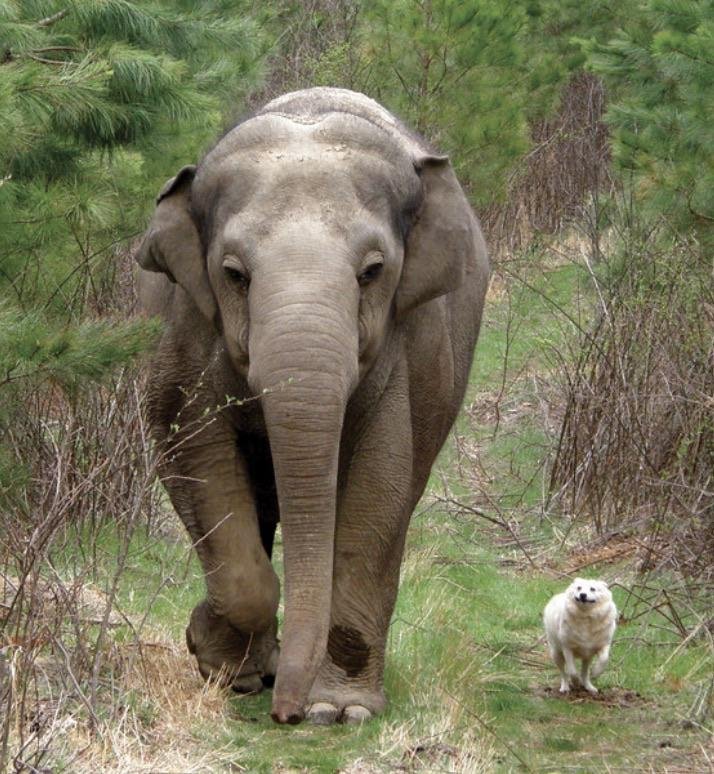
She had 2,700 acres of Tennessee to roam. Yet for three weeks, an 8,700-pound elephant named Tarra would not leave one small corner beside a gate. Nobody had asked her to wait there. The reason would soon travel around the world.
**1974. Burma.**
Tarra’s life began in the wild, beside her mother and the rest of her herd. At just six months old, she was captured, packed into a wooden crate and flown to the United States.
She ended up on display at a tire store in southern California, a baby elephant used to pull in customers. That is where a young college student named Carol Buckley first spotted her, walking past the window on the end of a rope.
Carol could not stay away. She helped care for the calf, eventually bought her, and spent the next two decades travelling with her through circuses, amusement parks, zoos, television studios and advertising shoots.
Tarra became famous as the world’s only roller-skating elephant. Yes, roller skates. She painted watercolours too.
But Carol wanted a quieter life for her than one spent under spotlights.
**1995. Hohenwald, Tennessee.**
Carol and Scott Blais open The Elephant Sanctuary, a place where elephants retired from circuses and zoos can simply be elephants again. Tarra, 21 years old, is its very first resident.
Over the years more elephants arrive, and almost every one of them finds a best friend, usually another elephant, to spend most of the day beside.
Tarra does not. She is friendly with everyone and close to no one.
**2003.**
A little white stray dog wanders onto the sanctuary grounds. The staff call her Bella.
She is one of more than a dozen stray dogs who end up living there, and the usual rule is simple. The dogs keep away from the elephants, and the elephants want nothing to do with the dogs.
Bella ignores the rule. And Tarra, for reasons nobody has ever been able to explain, lets her.
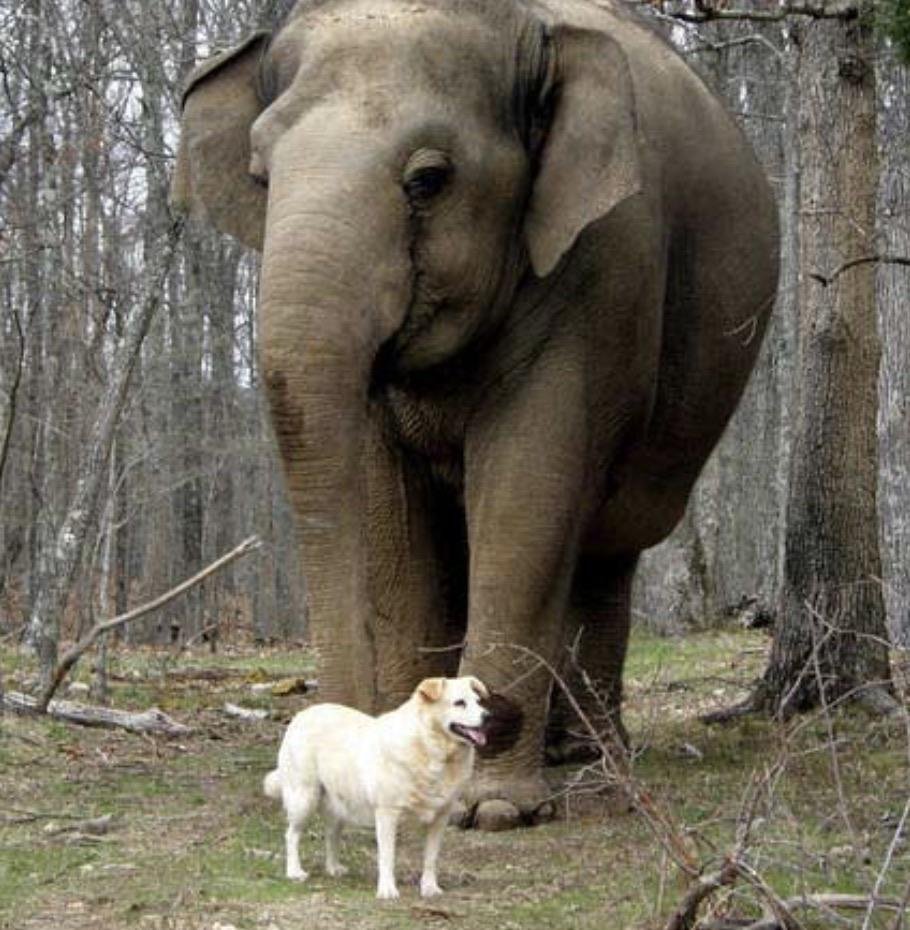
Soon they are inseparable. They walk the trails together, eat together, drink together and sleep side by side. When they play, caregivers hear rumbling, trunk popping and barking all at the same time.
Bella rolls onto her back and lets Tarra rub her belly with the bottom of her enormous foot. One careless step from an animal that size could crush her, and Tarra never takes it.
Tarra shares her stall so Bella has a home, her hay so Bella has a bed, and her shadow so Bella has shade on hot afternoons.
Carol later told CBS News: “Bella knows she’s not an elephant. Tarra knows she’s not a dog.”
**Late 2008.**
Then Bella is badly hurt. A spinal cord injury leaves her unable to move her legs. She cannot even wag her tail.
Staff carry her up to the sanctuary office, where she lies almost still for three weeks while vets run tests and take X-rays of her spine.
Outside, something strange is happening.
Tarra has thousands of acres of forest, fields and ponds to explore. Instead, she walks to a corner beside a gate, right outside the office, and stands there.
Day after day. For three weeks.
Finally, co-founder Scott Blais carries Bella out onto the office balcony so the two friends can at least see each other.
Bella’s tail starts to wag.
After that, the staff feel they have no choice. Every day they bring Bella down to visit Tarra, until the little dog is strong enough to walk on her own again.
**January 2009.**
CBS News tells their story on national television, and it spreads around the world. A children’s book called Tarra & Bella follows the same year.
For almost three more years, the elephant and the dog go on walking their trails together.
**October 24, 2011.**
That evening a caregiver named Suz watches the two friends leaving an area of the sanctuary called Marcella’s, almost a mile from the barn. At dinner Bella had been unusually excited. Suz says goodnight and goes home.
It is the last time anyone sees Bella alive.
**October 25.**
At the morning feed, Tarra is there. Bella is not.
The staff search everywhere. Suz sets Bella’s food dish where a camera can see it, hoping the little dog will turn up for breakfast. Tarra walks back to the barn alone.
**October 26.**
Steve Smith, the sanctuary’s director of elephant husbandry, decides to search close to the barn. He finds Bella’s body near a pond the two friends loved, just yards from the building.
A veterinarian concludes she most likely died in a coyote attack. But where she is lying, there is no sign of any attack at all.
Then caregivers notice blood on the underside of Tarra’s trunk.
Nobody saw what happened that night, and nobody ever will. But the staff came to believe Tarra had found her friend, lifted her gently and carried her home. Smith told CBS News simply: “Tarra moved her.”
That evening, 8 people carry Bella out to be buried at Marcella’s. Tarra stands less than 100 yards away, behind a line of trees, and will not come closer.
One caregiver later wrote that Tarra had already said her goodbye, and the burial was for the humans.
**October 27.**
The next morning, caregivers find a fresh elephant footprint on Bella’s grave.
Tarra had come back in the night, alone.
In the weeks that follow she grows quieter. The other elephants stay close and share their food with her. A year after Bella died, a caregiver finds Tarra near the little dog’s resting place, standing so close to her elephant friend Shirley that the two seem to be leaning on each other.
Tarra is 52 now. She lives on 850 acres in Georgia, still cared for by the same woman who first saw her walking past a window in 1974.
Bella weighed a tiny fraction of what Tarra did. She had no herd, no history and no reason to be welcomed. Tarra welcomed her anyway, and then stood guard when she could not stand at all.
Have you ever had a friend that nobody expected you to have?
Some friendships make no sense on paper. Those are often the ones that last.