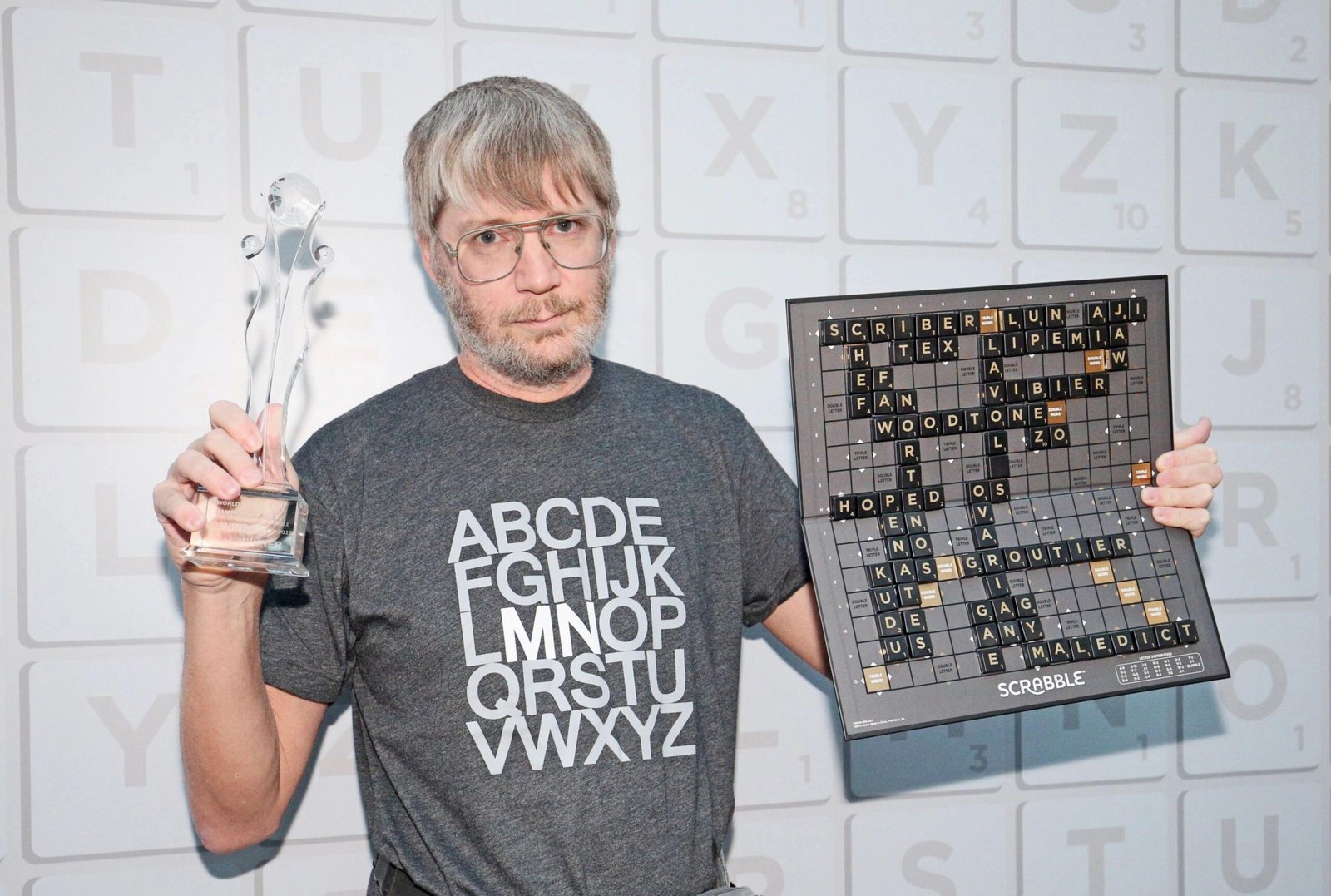
His mother taught him Scrabble when he was 28, because she was sure he could not spell. Years later, Nigel Richards sits down in Spain to face nearly 150 rivals. He cannot speak a word of Spanish.
𝗡𝗼𝘃𝗲𝗺𝗯𝗲𝗿 𝟮𝟬𝟮𝟰. 𝗚𝗿𝗮𝗻𝗮𝗱𝗮, 𝗦𝗽𝗮𝗶𝗻.
A hotel on the edge of Granada fills with people who have played this game in Spanish their whole lives. They come from 20 countries, from Argentina and Venezuela to Colombia and Spain.
The quiet New Zealander with the beard has never played a single competitive game in Spanish, and this tournament is his very first.
Some of the fluent players doubt he has a chance. Spanish Scrabble is a different beast, because the tiles carry different points and there are thousands of extra words seven, eight and nine letters long.
He cannot ask for directions or chat with the person across the board. All he has is a long list of words that he has barely ever heard spoken out loud.
To see how he got here, you have to go back to a card table in New Zealand.
𝗧𝗵𝗲 𝗺𝗶𝗱-𝟭𝟵𝟵𝟬𝘀. 𝗖𝗵𝗿𝗶𝘀𝘁𝗰𝗵𝘂𝗿𝗰𝗵, 𝗡𝗲𝘄 𝗭𝗲𝗮𝗹𝗮𝗻𝗱.
Nigel won a university scholarship as a young man, chose not to go, and took a quiet job at the post office instead.
When he was small, his mother said, he cared about numbers, not words. Later he got so good at the card game 500 that she grew tired of losing to him.
So she picked a new game, one she felt sure he would be bad at. He could not spell well, and English had never been his best subject at school.
She chose Scrabble.
As bets go, it is one of the worst a mother has ever made.
In 1996 he joins the Christchurch Scrabble Club. By 2007 he is world champion. He goes on to win the English world title five times, along with nearly 200 tournaments.
𝟮𝟬𝟬𝟬. 𝗞𝘂𝗮𝗹𝗮 𝗟𝘂𝗺𝗽𝘂𝗿, 𝗠𝗮𝗹𝗮𝘆𝘀𝗶𝗮.
He moves to Malaysia for a job and lives a simple life. Reports say he has no TV and no radio, and he does not drink or smoke.
What he does is ride his bicycle for hours, and as the wheels turn, he runs through word lists in his head, page after page.
A friend from the old club, Liz Fagerlund, says he does not read words one at a time but takes in a whole page as if it were a photo.
She tells CNN: “He can look at a page full of words and absorb them all.”
By 2015, English is no longer enough of a test for him.
𝗟𝗮𝘁𝗲 𝗠𝗮𝘆 𝟮𝟬𝟭𝟱.
He decides to enter the French world championship, which is only nine weeks away.
He does not speak French. He can say bonjour, with an accent, and give the scores in French because the rules demand it. That is about all.
The French Scrabble list holds about 386,000 words, roughly twice as many as the North American one. He starts learning them anyway.
𝗝𝘂𝗹𝘆 𝟮𝟬, 𝟮𝟬𝟭𝟱. 𝗟𝗼𝘂𝘃𝗮𝗶𝗻-𝗹𝗮-𝗡𝗲𝘂𝘃𝗲, 𝗕𝗲𝗹𝗴𝗶𝘂𝗺.
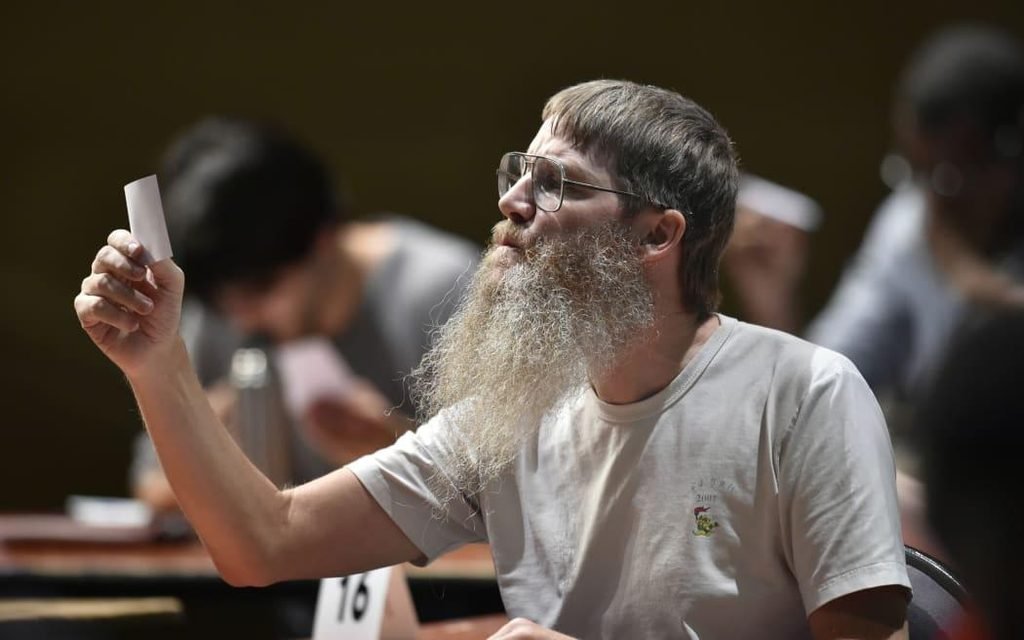
He wins 14 of his first 17 games and reaches the final, where Schélick Ilagou Rekawe, a French speaker from Gabon, is waiting for him.
Nigel loses the first game of the final, 370 to 427.
For a moment, it looks as if the language has finally beaten him.
Then he wins the next two, 484 to 376 and 565 to 434. The crowd stands and cheers, and the new French champion cannot thank them in French. He needs a translator.
Someone in French Scrabble later joked that they had wondered if he hid a microphone in his beard.
He wins the French title again in 2018, and after that, with two languages behind him, he turns to a third.
𝗟𝗮𝘁𝗲 𝟮𝟬𝟮𝟯.
The Spanish list is bigger still, at about 600,000 words, a friend says. Across English, French and Spanish, that is close to a million words he knows how to spell.
He learns none of their meanings, and he does not need to. In Scrabble a word only has to be real. Nobody asks you what it means.
He spends about a year on it.
𝗡𝗼𝘃𝗲𝗺𝗯𝗲𝗿 𝟮𝟬𝟮𝟰. 𝗚𝗿𝗮𝗻𝗮𝗱𝗮.
He wins, and wins again. Across 24 games, he averages about 539 points.
Then, in one game, a woman from Argentina beats him. So he can be stopped after all.
The defending champion, Benjamín Olaizola of Argentina, has won this title before, speaks Spanish from birth, and is still very much in the hunt.
But Nigel keeps doing something the experts struggle to explain. He passes up the obvious plays.
Olaizola later tells Spanish radio: “He had a hand that was the most obvious one, the one that a computer would give to you, and he didn’t use it.”
When the last tile is counted, Nigel has won 23 of his 24 games. Olaizola, with 18 wins, is second.
In the Duplicate event, where every player gets the very same letters, Nigel also scores a perfect 100%. Olaizola said no one in history had ever done that.
An official of the Spanish federation tells the Washington Post: “He shut our mouths completely.”
𝗗𝗲𝗰𝗲𝗺𝗯𝗲𝗿 𝟮𝟬𝟮𝟰.
Weeks later, the story reaches the papers and races around the world, and reporters start asking for interviews. He is not interested.
Liz Fagerlund fields the calls instead. She says: “He doesn’t understand what all the hoo-ha is about.”
That may be the most remarkable part of all. To Nigel, this is simply what you do. You look at the words, you ride your bike, and you remember.
A mother once chose a game she was sure her son would lose, because she only wanted to win a few rounds at home. Instead she handed him the thing he would be best at in the world, in three languages.
Who once told you that you would be bad at something, and turned out to be wrong?
Somewhere tonight, a man on a bicycle is turning pages that only he can see.