Randy and Kit Cassingham visited 65 countries in two years from the same small cabin. Then, shortly after 7 a.m. one Monday in Cambodia, a short message gave them and 200 neighbors a few hours to leave the only home they had.
**September 2024. Belfast, Northern Ireland.**
Kit Cassingham is 69 years old, and she has just decided to walk 70 miles from Belfast to Londonderry. She wants to see the country, and she wants to prove that the people waiting with her are not simply stuck.
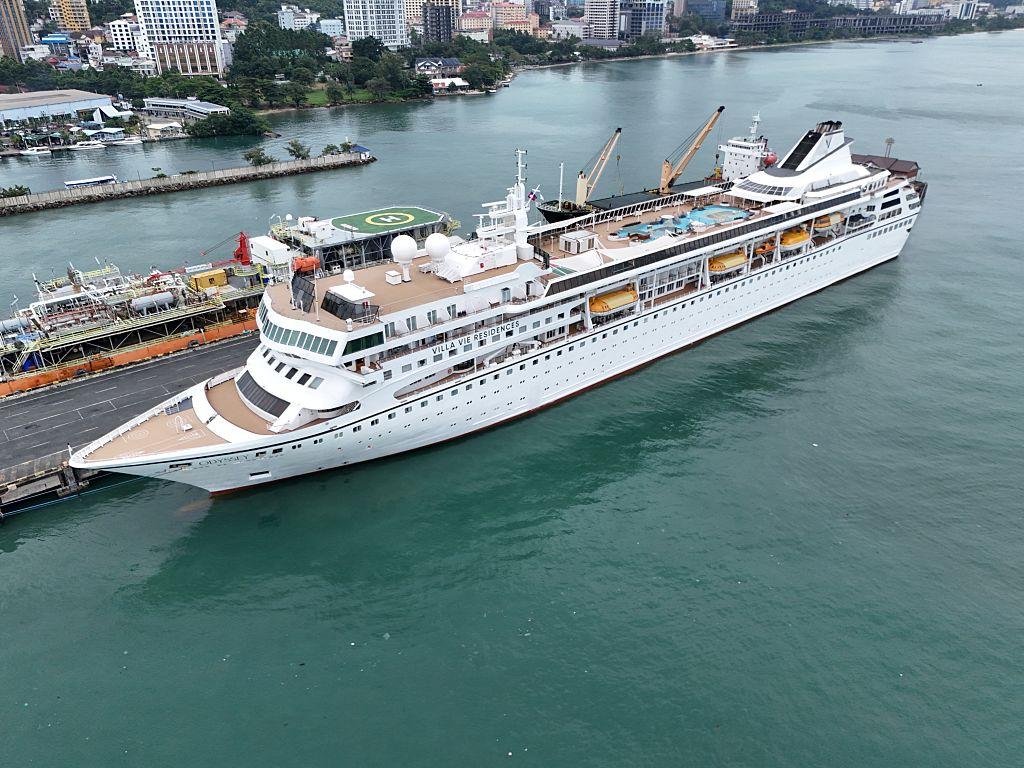
They are waiting for their new home to leave the dock. It is a cruise ship called the Odyssey, and it has been sitting in Belfast for four months while repairs and paperwork drag on.
Her husband Randy, a 65-year-old writer from Colorado, has a ready answer for anyone who asks why they don’t just go home. He tells a reporter: “We don’t have a home to go back to.”
They had traded life on land for something new. A Florida company called Villa Vie Residences was selling cabins on an older cruise ship as permanent homes at sea. You could rent one, buy a few years, or buy a suite for the life of the vessel, with prices starting around $230,000.
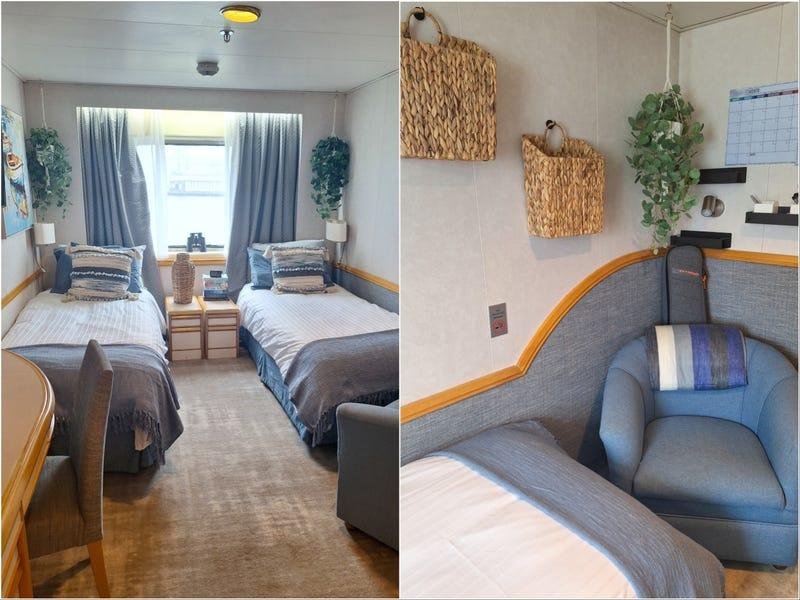
For a couple who loved travel but hated airports, the promise was impossible to resist. Unpack once, keep the same bed and the same neighbors, and wake up in a new country every few days without ever standing in a security line again.
The long wait in Belfast does something nobody planned. Strangers become neighbors before the ship moves an inch. A retired doctor from Florida joins Kit on her walk. Gian Perroni, a Canadian passenger, meets Angela Harsanyi on a stroll through the city, and by the time the Odyssey is ready, the two of them are engaged.
**October 2024.** The Odyssey finally sails.
**The next two years.** The ship crosses the Atlantic to the Caribbean, slips beneath the Golden Gate Bridge, glides past the glaciers of Alaska and Chile, and goes on to Japan and Australia. Randy keeps count of every country.
The Cassinghams spend around $1 million on this all-inclusive life, which they hope will last at least 15 years.
That is not a typo.
Life aboard is far from perfect. Residents complain about missed ports, patchy internet and food that slowly gets worse. But the little community holds together, and for many of them the ship is no longer a holiday. It is the place where they live.
**February 2026.** War breaks out in the Middle East, and tanker traffic through the Strait of Hormuz is choked. Fuel prices climb around the world, and they climb hardest in Southeast Asia, exactly where the Odyssey is heading next.
The company slows the ship and spends more days in port to burn less fuel. It is not enough. By its own figures, the monthly fuel bill per cabin, once about $1,800, climbs to as much as $8,000.
The ship was built for 650 residents. It never comes close. Randy later says the number aboard peaked at around 350.
**September 2026. Ha Long Bay, Vietnam.** Cabin owners are called to a meeting, and a company official asks them to help raise $1 million so the ship can leave the bay. Pamela Reckamp, who was in the room, remembers the warning: “If we don’t get this money, we have about four days of the ship running.”
At a later meeting, a woman stands up. She bought her cabin only in August, she says, and nobody told her about any of this. Reckamp remembers her words exactly: “I sold my house. I sold my car. I bought my home on this ship.”
**October 23, 2026. Sihanoukville, Cambodia.** The Odyssey arrives from Thailand carrying 203 residents and 156 crew. It is due to sail on to Vietnam within days.
**The following Monday, just after 7 a.m.** A note appears on the ship’s internal message board. The Odyssey is going into a temporary layup. Every resident must be off the ship by 2 p.m.
Seven hours to pack up two years of a life.
Randy and Kit carry their belongings down the gangway with everyone else. They are not even allowed to walk out of the port, so shuttle buses drop them in the middle of town. Randy writes that the company did nothing at all to help. The company says it is paying for hotels and local transport, but not for anyone’s flight out of Cambodia.
The next day, Villa Vie announces it will spend the next two months trying to restructure, and admits that no outcome is assured. The ship’s future is still unknown.
You might expect anger from a man whose $1 million dream has just ended on a Cambodian dock. Randy, speaking from a hotel in Sihanoukville, says something else: “But money aside, it was a fantastic adventure.” If the ship ever sails again, he says, they will consider going back.
Maybe that is the real lesson here. A home can be taken away in seven hours. The friendships made on a long walk across Northern Ireland, the engagement that began on a stroll through Belfast, and the memory of all those countries cannot be.
But the story also carries a warning worth passing on. When your house, your neighbors and your whole daily life depend on one company’s bank balance, you are trusting far more than a building.
Would you ever trade your house on land for a cabin with the whole world outside the window?