A 26-year-old electrician in Iceland loses both arms in 1998. That same year in Lyon, France, a surgeon makes history with the world’s first hand transplant. Nine years later, the electrician tracks that surgeon down and asks him one impossible question.
**January 12, 1998. Near Reykjavík.**
Guðmundur Felix Grétarsson, known to almost everyone as Felix, is out on a winter job repairing a high-voltage power line. The line carries 11,000 volts, enough electricity for around 500 homes.
He touches the wrong wire.
The current burns through both of his arms and throws him to the frozen ground below, where he breaks his back and his neck. He slips into a coma that lasts three months.
While he sleeps, surgeons fight to keep him alive. In that first year, he goes through 54 operations. That is not a typo.
When he finally wakes, both of his arms are gone. He is 26, the father of two little girls he can no longer pick up.
The orthopaedic surgeon who treated him later said that in a 40-year career, he had never seen anyone so badly injured.
**The lost years.**
Felix tries prosthetic arms, but they never feel like part of him. The pain and the grief pull him toward alcohol, and his liver, already damaged by the accident, begins to fail.
**2002.** He receives a liver transplant. It fails. Two months later, he needs a second one.
Most people never face a single organ transplant. Felix has had two before his 31st birthday, and he still has no arms.
**2007. A hotel in Reykjavík.**
Professor Jean-Michel Dubernard, the French surgeon behind that first hand transplant in 1998, comes to Iceland to give a lecture. His team has since performed the world’s first partial face transplant as well.
Felix finds out where he is staying and goes to meet him. He asks whether a day might come when doctors could transplant entire arms, all the way up.
Dubernard does not laugh. He agrees to look at the case.
Felix later said he had met countless doctors in his life, but this was the first one who made him believe he might have arms again.
The obstacle is enormous. On his left side, almost nothing is left to attach a new arm to. The surgeons would have to rebuild the shoulder itself, something no double arm transplant anywhere in the world has ever included.
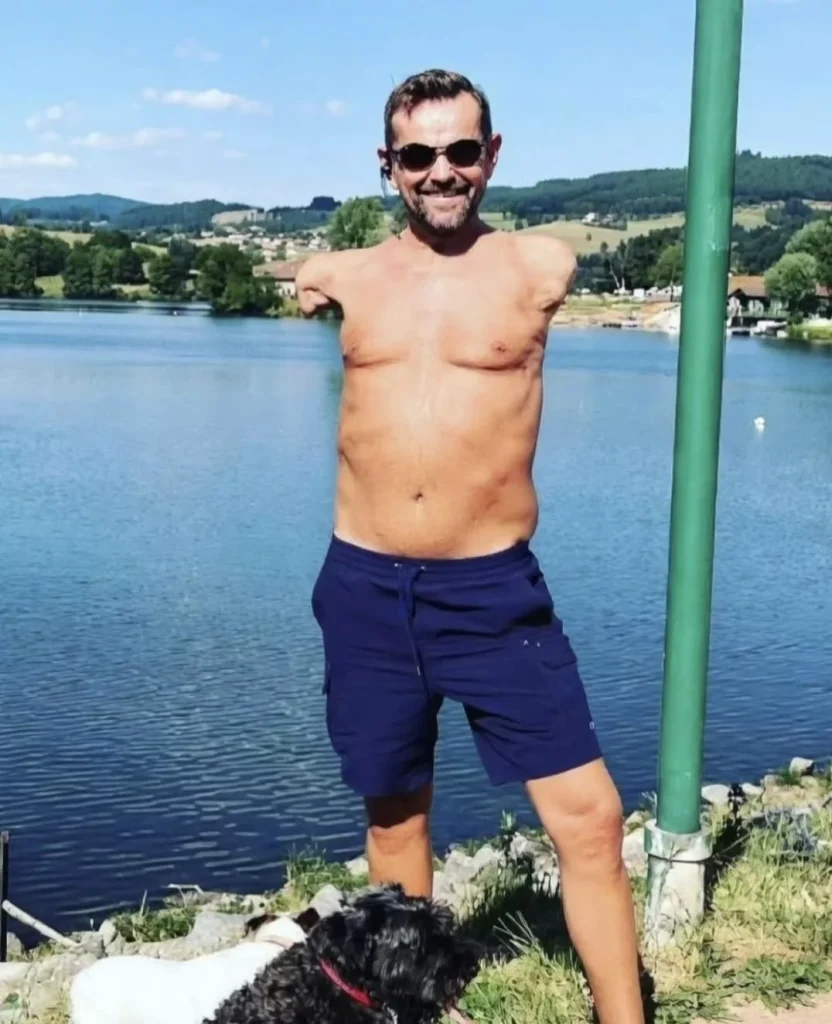
**2013.** Felix leaves Iceland and moves to Lyon, believing the operation is only months away. In France he meets Sylwia, the woman who becomes his wife.
The months turn into years. He is placed on the donor list in 2016, and still the call does not come. He waits through one winter after another, keeping his body as strong as he can for a surgery that may never happen.
**January 11, 2021.** The phone rings. A donor has been found.
**January 13, 2021. Édouard Herriot Hospital, Lyon.**
Almost 23 years to the day after the accident, Felix is wheeled into surgery. Teams from 5 hospitals, around 50 people in all, work in shifts through the day and into the night.
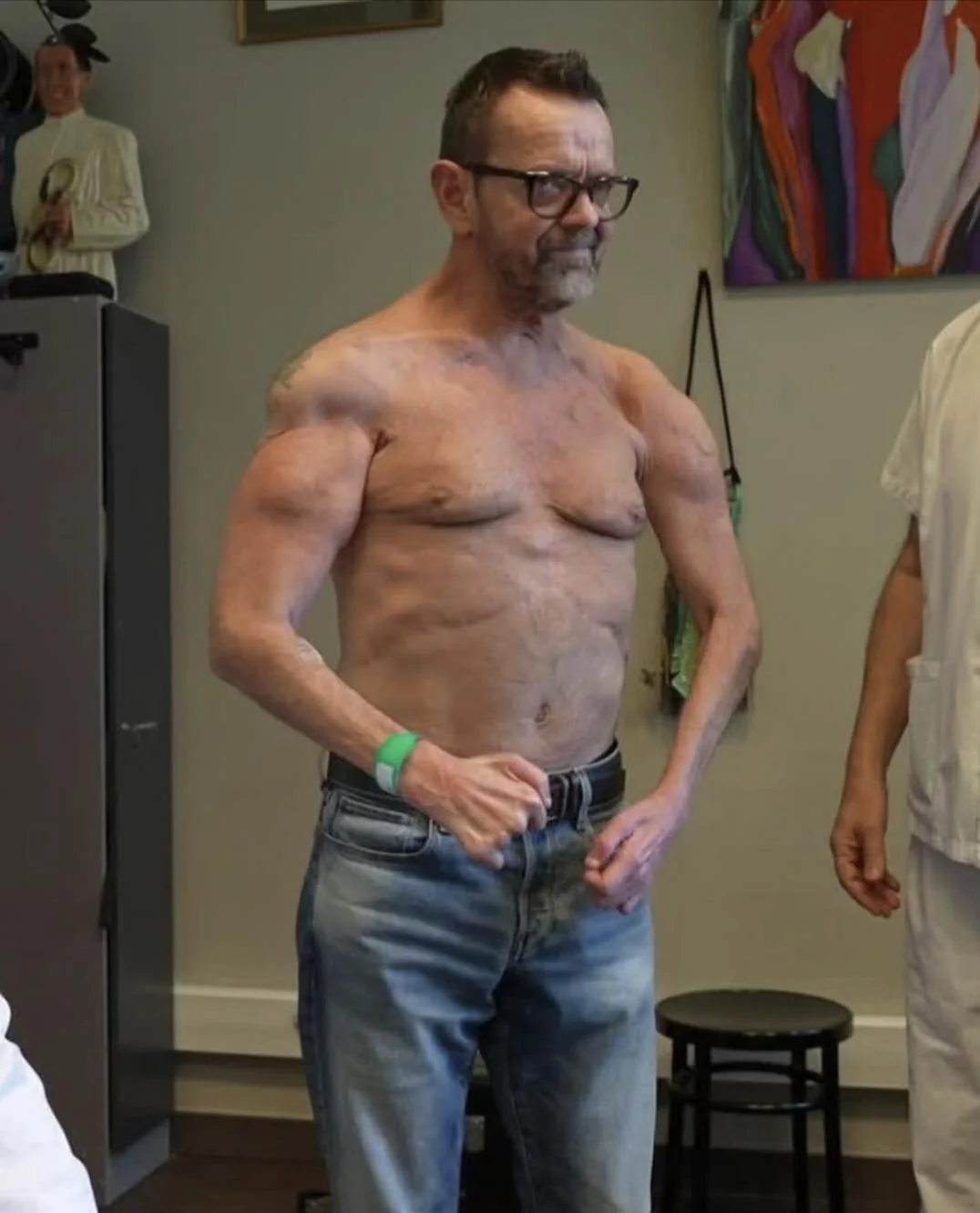
On the right side, they join a donor arm to what remains of his upper arm. On the left, they transplant the arm together with the shoulder joint.
The operation lasts almost 15 hours. When it ends, he is the first person in history to receive two complete arms from a donor, shoulder included.
But a new arm is not a working arm. Nerves have to grow back slowly, and his brain has to learn to talk to muscles it has never met.
Six months later, Felix can flex his biceps. His lead surgeon, Dr Aram Gazarian, had said that would change his life.
Riding in a car one day, he pushes his hand out of the open window and feels the breeze move across his fingers. He later called it a very strange and special moment.
Later that year, he wraps his arms around his daughter for the first time in more than two decades. Soon he is hugging his grandchildren too.
He keeps his sense of humour through all of it. “I have a Danish liver, French arms. I’m a modern-day Frankenstein,” he jokes.
About two years after the operation, he rides a bicycle again.
Then his body turns on the gift. Just over two years after the transplant, it begins to reject the arms. One elbow swells to several times its normal size, and he is rushed into surgery twice in a matter of days. For a while, there is a real chance he could lose them.
He keeps them.
**June 2026.** Felix is getting ready to go back to work, something he says would never have been possible without the operation. He describes the simple joy of ordinary jobs, like mowing the lawn. A new grandchild has just been born.
**Autumn 2026.** The road is still not smooth. After a cancer diagnosis this summer and surgery in August, he began treatment in October for fresh signs of rejection. He joked that this time, the arms were rejecting him rather than the other way around.
In the same week, he marked 19 years sober. He says he is optimistic.
Felix never got a miracle that made every hard thing disappear. He got something more honest: a second chance he had to fight for, and still fights for, one day at a time.
None of it happens if a man with no arms does not walk into a hotel in 2007 and ask a question most people would have been too embarrassed to say out loud.
Have you ever asked for something that seemed impossible, and been surprised by the answer?