He types three search terms into a missing-children website: Hawaii. Male. Missing 34 years. He is 34 years old, adopted, and simply curious. Then the first picture loads, and a stranger’s name sits under a face that looks exactly like his own.
**Early 2011. Philadelphia.**
Steve Carter sells software for a living. He grew up in Medford Lakes, New Jersey, the son of a military man and his wife, Steve and Pat Carter, who adopted him from an orphanage in Honolulu when he was 4 years old.
He has always known he was adopted. He has also always had questions, the quiet kind that never fully go away, no matter how happy the childhood.
That January, he reads about Carlina White, a woman taken from a New York hospital as a newborn in 1987 who solved her own kidnapping by spotting her baby photos on a missing-children website.
Steve wonders. So he opens missingkids, the site run by the National Center for Missing & Exploited Children, and types in where he came from.
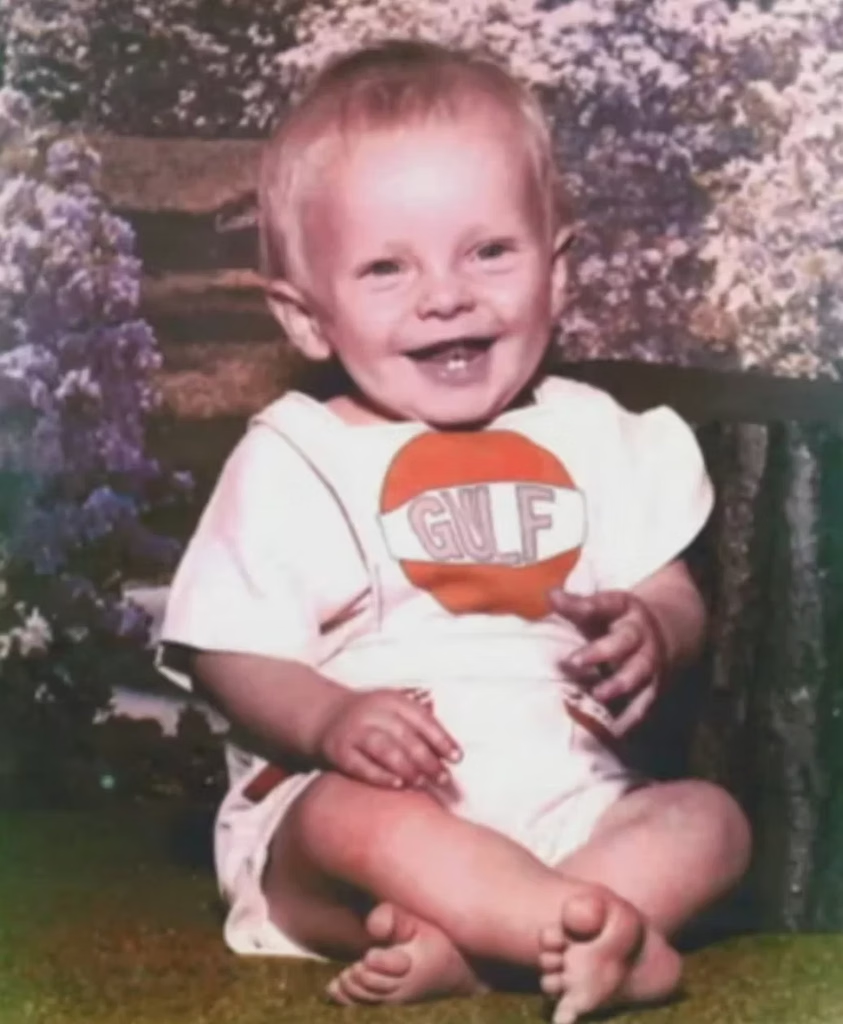
The first result is a missing baby named Marx Panama Moriarty Barnes.
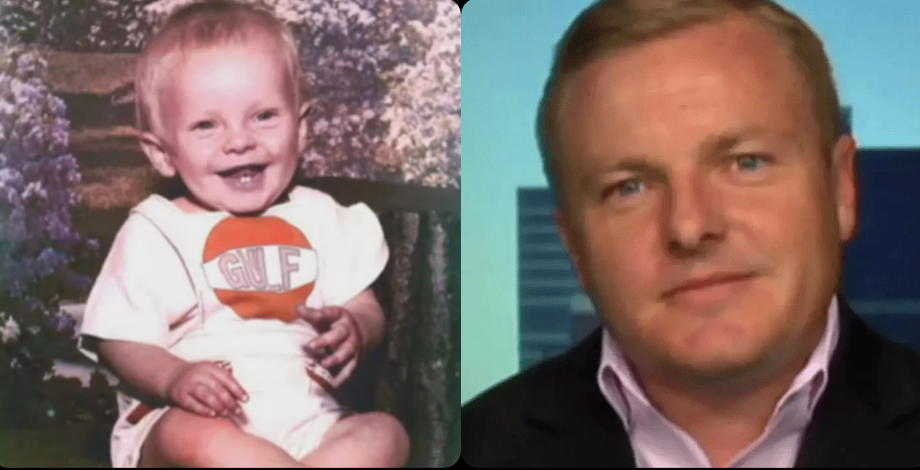
Beside the baby photos sits a computer-aged image of how that child might look as a grown man. Steve stares at it. He later told reporters: “My first thought was, ‘Oh my God, that’s me.'”
He shows his mother, Pat. He shows his friends. Every one of them sees the same thing he does.
**June 21, 1977. Hau’ula, Oahu.**
Thirty-four years earlier, a man named Mark Barnes is outside working in his yard when his girlfriend, Charlotte Moriarty, says she is taking their baby boy out for a while. The child is about six months old.
His father chose the name himself. Marx, after Karl Marx. Panama, after the boy’s godfather, whose nickname it was.
“That was the last I saw of them,” Barnes later said.
Charlotte had left before and always come back, so Mark waits. One week. Two. After three weeks, he reports them both missing and starts driving.
“I spent about a year and a half going crazy driving around the island,” he later told People magazine.
He never finds them. For a time, Mark later said, police even treated him as a suspect.
What he cannot know is that his son is alive, safe, and living in a small orphanage roughly 30 miles from his own front door.
Thirty miles. Not an ocean. Not a continent. Thirty miles.
Records suggest the woman found with the baby gave authorities a different name, a different birthday and a different background for the child’s father. She was taken to a psychiatric ward and soon vanished. Steve believes she was his mother, but nobody has ever been able to say for certain.
With the wrong details on every form, the missing-child report and the baby in the orphanage simply never meet.
**1981.**
The boy turns 4. The orphanage starts calling families on its adoption list, one at a time, and Steve and Pat Carter happen to be fourth.
They say yes. They give him their name and take him to the mainland, where he grows up loved, with no idea that a father in Hawaii still looks up every time the phone rings.
“I always expected a knock at the door or a phone call,” Mark Barnes later said.
**2001.**
Back in Hawaii, one person refuses to let the case die. Jennifer, Charlotte’s older daughter and the baby’s half-sister, was 8 years old when her little brother disappeared. She long feared he was dead, yet she still convinces authorities to reopen the file.
That push is the only reason the age-progressed picture exists. A sister’s stubborn hope, turned into an image, waiting a decade for the right person to see it.
**February 2011.**
Steve calls Honolulu police. At first, they brush him off. About a month later, they come back and ask him for a DNA sample.
Then he waits through eight long months without an answer.
The caution is not unusual. Every year, roughly 50 to 60 people contact the National Center convinced they have found themselves on its website, and most of those leads go nowhere.
**October 2011.**
The results arrive. The DNA matches. Steve Carter is Marx Panama Moriarty Barnes, and a case that sat open for 34 years has been solved by the missing child himself.
Soon after, Steve calls a small town in Northern California, where his biological father now lives.
Mark Barnes hears his son’s voice for the first time in more than three decades. “All I could say was, ‘Wow. Oh wow. Wow,'” he told People. In about an hour on the phone, the two men try to catch up on 32 years.

**April 2012.**
The story goes national. Honolulu police want it told, partly because critics had long doubted that age-progressed pictures ever help anyone get found. This one did, and it was recognized by the very person it was made to show.
Steve also connects with Jennifer, whose refusal to give up made the picture possible. Later, through his work with the National Center, he even meets Carlina White, the stranger whose story set him searching.
There is no fairy-tale finish. Steve and his father talk by phone and trade letters, but life keeps getting in the way, and Mark Barnes dies in 2023 before they ever meet face to face.
Charlotte Moriarty has never been found. Steve says he holds no anger toward her.
One day on a bus, a woman sitting behind Steve leans forward and says his name. Her own child has been missing for 22 years. His story, she tells him, gives her hope.
That is the message Steve now gives every family still waiting: always have hope.
Three people kept this story alive without ever working together. A father who drove the island for 18 months. A sister who would not stop asking. And a son who, 34 years later, was curious enough to type a few words into a search box.
Has someone in your family ever held on to hope long after everyone else had let go?