A 19-year-old from Detroit made history on the cover of Harper’s Bazaar in 1965. Yet most readers never guessed the woman on it was Black, because the artist had drawn her with pale, pinkish skin.
Her real name is Peggy Ann Freeman. The fashion world will soon know her as Donyale Luna.
It will take her another year, and another country, before anyone is allowed to see her as she really is.
𝗝𝗮𝗻𝘂𝗮𝗿𝘆 𝟭𝟵𝟲𝟱. 𝗡𝗲𝘄 𝗬𝗼𝗿𝗸.
Not long before, she was a teenager in Detroit with a tough home life and big dreams. In 1963 a visiting English photographer named David McCabe spotted her and could not stop looking. He told her to go to New York.
She goes, and within weeks she is sitting in the office of Nancy White, the editor of Harper’s Bazaar, hoping someone will give her a chance.
White is so struck that she throws out the cover she had already planned. She has Luna sketched for the January issue instead. In the magazine’s 98 years, no Black woman has ever been on its cover.
But the sketch is careful, with her features softened and her skin lightened until she could pass for almost anyone. A first, but a hidden one.
The magazine’s sales team is nervous about what happens if readers find out.
𝗔𝗽𝗿𝗶𝗹 𝟭𝟵𝟲𝟱. 𝗛𝗮𝗿𝗽𝗲𝗿’𝘀 𝗕𝗮𝘇𝗮𝗮𝗿.
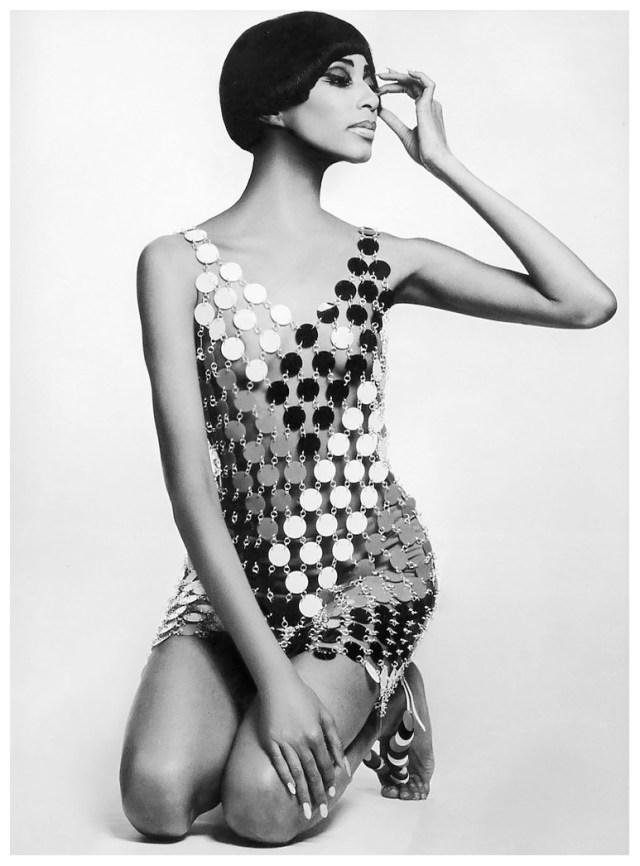
The great photographer Richard Avedon has signed Luna to a one-year contract. He is guest editing the April issue, and he puts her right inside it, photographed in clothes by Rudi Gernreich, James Galanos and a young Paris designer named Paco Rabanne.
This time there is no softening, and no careful artist’s brush standing between her face and the reader.
The backlash comes fast. Advertisers in the Southern states pull their money. Readers cancel their subscriptions. The magazine’s owner, the Hearst company, makes its displeasure clear.
Two famous American designers, Mainbocher and Norman Norell, refuse to let her wear their clothes at all.
Avedon later said it plainly: “For reasons of racial prejudice, and the economics of the fashion business, I was never permitted to photograph her for publication again.”
She is 19 years old, and her own country has just closed the door on her.
𝗗𝗲𝗰𝗲𝗺𝗯𝗲𝗿 𝟭𝟵𝟲𝟱. 𝗟𝗼𝗻𝗱𝗼𝗻.
So Luna packs up and crosses the Atlantic.
London in the mid-1960s is loud, young and hungry for anything new, and Luna is new in every way. She wears bright blue contact lenses and sometimes a blond wig. On set she crawls, freezes, stretches and twists into poses no other model would try.
Photographers who had never seen anyone like her line up to work with her.
𝗠𝗮𝗿𝗰𝗵 𝟭𝟵𝟲𝟲. 𝗕𝗿𝗶𝘁𝗶𝘀𝗵 𝗩𝗼𝗴𝘂𝗲.
The photographer is David Bailey. In the picture she raises one hand across her face, so that only one dark, heavily lined eye looks out at the reader.
It runs on the cover of the March 1966 issue. Donyale Luna becomes the first Black model ever to appear on the cover of any edition of Vogue.
American Vogue would not put a Black model on its cover until 1974, a full eight years later.
A month later, TIME magazine calls it The Luna Year. It names her the hottest model in Europe.
𝟭𝟵𝟲𝟲. 𝗣𝗮𝗿𝗶𝘀.
The doors that shut in New York now swing open across Europe. She models for Yves Saint Laurent, Valentino and André Courrèges.
She also wears the wild creations of Paco Rabanne. In 1966 he shows his first collection, 12 Unwearable Dresses in Contemporary Materials. They are made of plastic discs and metal rings, with hardly any fabric at all. On Luna, they look like clothes from the future.
And then there is Salvador Dalí. The surrealist painter meets her and calls her “the reincarnation of Nefertiti.” In one famous photograph, she wears a plain white dress that Dalí himself has painted on.
A year later, the London mannequin maker Adel Rootstein models a store dummy on her. It is among the first Black mannequins ever made, and shop windows start to look a little more like the people walking past them.
𝟭𝟵𝟲𝟵. 𝗥𝗼𝗺𝗲.
Luna moves to Italy and turns to film. The great director Federico Fellini casts her as a sorceress in his 1969 film Satyricon.
She marries an Italian, and in 1977 she gives birth to a daughter, Dream.
𝗠𝗮𝘆 𝟭𝟵𝟳𝟵. 𝗥𝗼𝗺𝗲.
Donyale Luna dies in Rome in May 1979. She is just 33 years old, and little Dream is still a toddler.
For decades her name slips out of the history books. Many people grow up believing the first Black cover star of Vogue arrived in 1974.
𝟮𝟬𝟮𝟯.
Then the story comes back. Her daughter Dream, now grown, works with filmmaker Nailah Jefferson on a documentary, Donyale Luna: Supermodel. It brings her face, her real face, back to a whole new generation.
Look back at that first sketch from 1965, with its pale, careful lines, and you can see a world that was not ready for her.
Luna went somewhere that was. And once the world did see her, it could never quite go back.
Who is someone in your life who was told they did not fit, and then proved everyone wrong?
She covered one eye for the camera, and the whole world finally looked.