Two council officers spend 2 hours in the dark watching a family’s log cabin, partly from a neighbour’s bathroom window. They write down a flickering TV and a man’s cough. It would take more than 3 years to learn whether any of it was legal.
The family inside are pig farmers. Matthew Silvester and Helen Freeman started their small business in 2020, raising free-range Saddleback pigs, the black breed with a pale band around the shoulders. They call it The Woodland Pig Company.
𝗦𝘂𝗺𝗺𝗲𝗿 𝟮𝟬𝟮𝟮. 𝗦𝗼𝘂𝘁𝗵 𝗪𝗮𝗿𝗻𝗯𝗼𝗿𝗼𝘂𝗴𝗵, 𝗛𝗮𝗺𝗽𝘀𝗵𝗶𝗿𝗲.
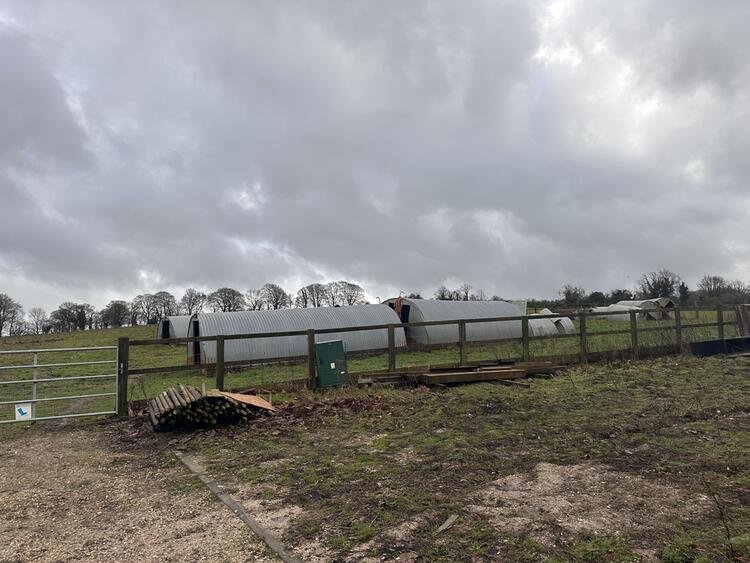
They buy a field off a quiet country lane and name it Hares Farm. The herd grows to 35 sows and 2 boars, and the farm turns out about 500 pigs a year. They sell their pork at more than 100 farmers’ markets a year and cook at about 28 hog roasts.
There is one problem. The land is farmland, and there is no permission for anyone to live on it.
𝗢𝗰𝘁𝗼𝗯𝗲𝗿 𝟮𝟬𝟮𝟮.
The couple bring a twin-unit caravan onto the field, a pitched-roof lodge that looks like a log cabin. They hook it up to water and power and move in. They have a baby at home, and sows often give birth at night, so being close by matters to them.
Neighbours complain. Within days, Hart District Council goes to the High Court and wins an injunction, a court order banning anyone from living in the cabin.
The couple insist the cabin is used for work. In court, Matthew later explains why the signs of family life are everywhere: “Finding a used nappy would not be something out of the ordinary, it is a family working farm.”
The council is not convinced, and it wants proof. Nobody yet guesses that the fight over this one field will outlast the farm itself.
𝗝𝘂𝗻𝗲 𝟴, 𝟮𝟬𝟮𝟯. 𝟭𝟬.𝟰𝟱𝗽𝗺.
Two officers arrive after dark. They watch the cabin from a neighbour’s paddock, then through a gap in a fence, then through a hedge facing the back window. Finally they stand in another neighbour’s ensuite bathroom and look out across the field.
They stay until about 12.45am. Their notes record lights changing, a television flickering and a man coughing. Emails later show officers had asked a neighbour to send a text if the site looked occupied at 10pm.
Under British law, a council that wants to watch someone in secret is supposed to get signed permission first. Whether anyone signed it will matter a great deal.
𝗝𝘂𝗹𝘆 𝟰, 𝟮𝟬𝟮𝟯. 𝟱.𝟰𝟱𝗮𝗺.
The officers come back at dawn. They cross neighbouring land to photograph the back of the farm, and they note a child’s pushchair parked beside the cabin.
There was body camera footage of that night visit. Years later, it turns out to be gone. It had been stored only on one senior director’s account, and the account was deleted when he left the council.
𝗡𝗼𝘃𝗲𝗺𝗯𝗲𝗿 𝟮𝟬𝟮𝟰.
The case reaches a High Court judge, and it goes badly for the couple. He is sure that both of them broke the injunction in January, February and March 2024. Each is given a 6-week prison sentence, suspended for 12 months, so neither goes to jail as long as they obey the order.
The judge hears that they have 2 young children, the youngest just 9 months old. By then the family is living in a hotel.
For a small farm, it is close to the end. According to reports, the pigs are sold at auction and The Woodland Pig Company closes its gate.
𝗔𝘂𝗴𝘂𝘀𝘁 𝟮𝟬𝟮𝟲.
The field is sold. Reports put the price at more than £200,000 for about 8 acres, and say the buyers are from the Traveller community. Over the bank holiday weekend, heavy vehicles and building materials roll onto the land.
Local residents call the council again. By Sunday morning an emergency court order is served on the site, and a week later the High Court keeps it in place. That new dispute is still being worked out.
𝗡𝗼𝘃𝗲𝗺𝗯𝗲𝗿 𝟱, 𝟮𝟬𝟮𝟲.
Then the answer to the question from those two nights. The Investigatory Powers Tribunal, the special court that hears complaints about secret surveillance, gives its ruling.
The watching was covert, and nobody had given the permission the law requires. The tribunal says it was not in accordance with the law and orders the council to destroy everything it gathered.
The council accepts the surveillance was not properly authorised and says it has changed its rules. It also says none of the material was used in court, so the earlier rulings stand. Matthew believes it helped build the case against them. Of the family’s court cases, he says simply: “We can’t undo them.”
This is not a story with a clean hero. The couple did break a court order, and a judge was sure of it. But a family raising pigs and a baby in a field had their evenings watched from a stranger’s bathroom, and the law says that should never happen without permission.
Rules matter. So do the rules about how rules get enforced. Because one pig farmer complained, the next family in that district should at least have a signed form standing behind anyone who watches them.
Where would you draw the line: should a council ever be allowed to watch a family’s home at night to enforce a planning rule?
Somewhere in Hampshire, a bathroom window is just a window again.