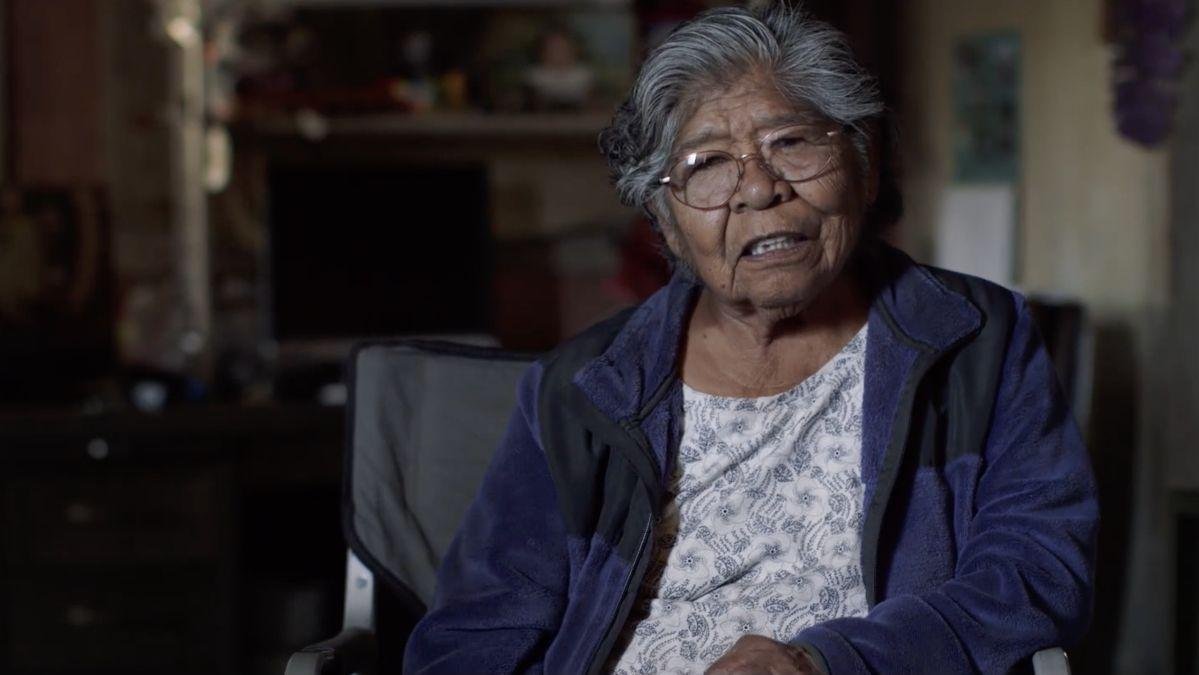
One woman. One fading language. Fewer than 200 people left in her tribe. Marie Wilcox is nearly 70 when she grabs old envelopes and scraps of paper. She starts writing down words her people are forgetting. She never really stops.
1933. California’s Central Valley.
Marie Wilcox is born the youngest of seven children. She grows up on a ranch, and the language in her ears is not English. It is Wukchumni.
Wukchumni is a variety of Yokuts, the tongue of her people along the Kaweah River. Her grandmother speaks it to her every day. For a little girl, it is simply the sound of home.
Then her grandmother dies.
Something quiet breaks inside Marie. She stops speaking the language. Years later, she puts it plainly: “I left my Indian language behind when my grandma died.”
Decades pass.
Marie grows up and raises a family. English fills her days. The old words sit somewhere deep inside her, untouched.
Meanwhile, the languages around her are fading. Before Europeans arrived, California was home to roughly 100 Indigenous languages. Many are now gone completely. Others survive with only a handful of fluent speakers.
Wukchumni is heading the same way.
Then something unexpected happens.
Marie’s sisters begin teaching the language to the children in the family. Marie hears the young girls stumbling over the old words, trying to speak like their ancestors.
It wakes something up in her. The words start coming back.
The early 2000s.
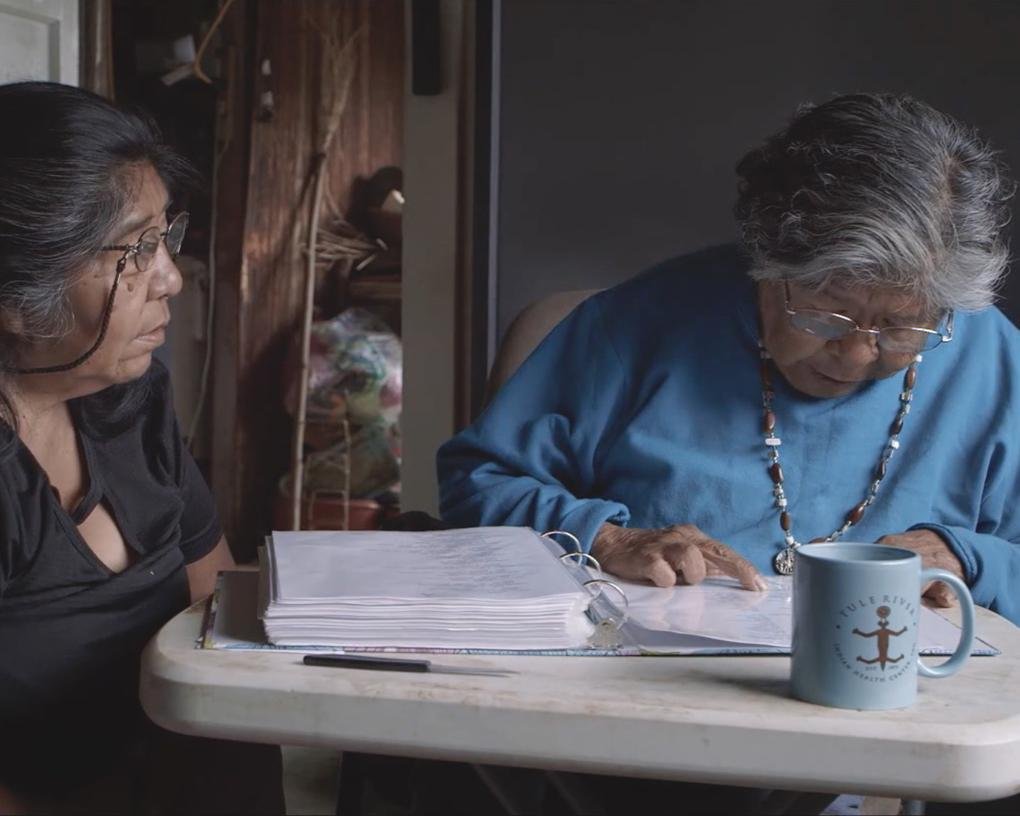
Marie is close to 70 years old. She begins writing down every Wukchumni word she can remember. She uses whatever is nearby: the backs of envelopes, scraps of paper, anything with blank space.
Her daughter, Jennifer Malone, is stunned. She never expected her mother to remember so much.
But scraps of paper get lost. So Marie decides to do something many people her age would never attempt.
She learns to use a computer.
She types slowly, one letter at a time. An Apache man named Nicholas Luna helps her with the machine. Jennifer helps organize the growing pages. Hour after hour, word after word, the list gets longer.
Here’s what makes it worse: not everyone understands. Jennifer later admits that much of the family can’t see why Marie is so fixated on this project. Why spend years typing words that almost nobody speaks?
Marie keeps going anyway.
Roughly seven years later.
The core of the dictionary is done. But Marie knows something important. A word on a page cannot teach you how it sounds. Spelling can’t capture the music of a voice.
So she starts recording. Her great-grandson, Donovan Treglown, helps her capture the pronunciation of each word, so future learners will hear Wukchumni the way it is meant to be spoken.
2014.
By now, Marie is 80 years old. She carries a weight few people on Earth will ever feel. She is reported to be the only fluent speaker of Wukchumni left alive.
Think about that for a moment. Every joke, every prayer, every memory of her grandmother’s voice in that language, she holds alone.
Her tribe is small. It is estimated that fewer than 200 Wukchumni remain, and they are not even federally recognized.
That same year, filmmaker Emmanuel Vaughan-Lee releases a 10-minute documentary called Marie’s Dictionary. It travels far beyond California. Teachers show it in classrooms. Viewers around the world meet the quiet woman typing at her computer.
By this point, the dictionary has consumed more than 13 years of her life.
Five years later.
Vaughan-Lee returns to visit Marie and her family. What he finds is remarkable.
Jennifer is now teaching regular Wukchumni classes to community members. Marie, now 85, sits beside her daughter, speaking with anyone who wants to join them.
And then comes the detail most people have never heard.
Marie’s great-great-grandson, a little boy named Oliver, is being raised to speak Wukchumni from birth. He is the first person in four generations of the family to grow up with the language from day one.
The language that went silent in Marie’s life when her grandmother died is now being spoken to a baby.
2019.
Her dictionary is officially copyrighted. Two decades of scraps, keystrokes and recordings are now protected for the generations to come.
September 25, 2021.
Marie Wilcox dies at 87.
But this time, the language is not left behind. When she passes, at least three people in her family speak Wukchumni fluently, including Jennifer. The classes continue. The recordings remain. Other Native communities look to her dictionary for inspiration.
Jennifer sums up her mother’s devotion in six simple words: “The dictionary was her whole life.”
Marie never set out to be a hero. She was a grandmother with an old computer and a stack of envelopes. But she refused to let her own grandmother’s voice disappear.
It is never too late to begin the work that matters most. Sometimes, saving something precious starts with writing down a single word.
Is there a language, recipe or story from your grandparents that your family is slowly forgetting? Tell us in the comments.
Someone who needs to know, it is never too late to save what you love.